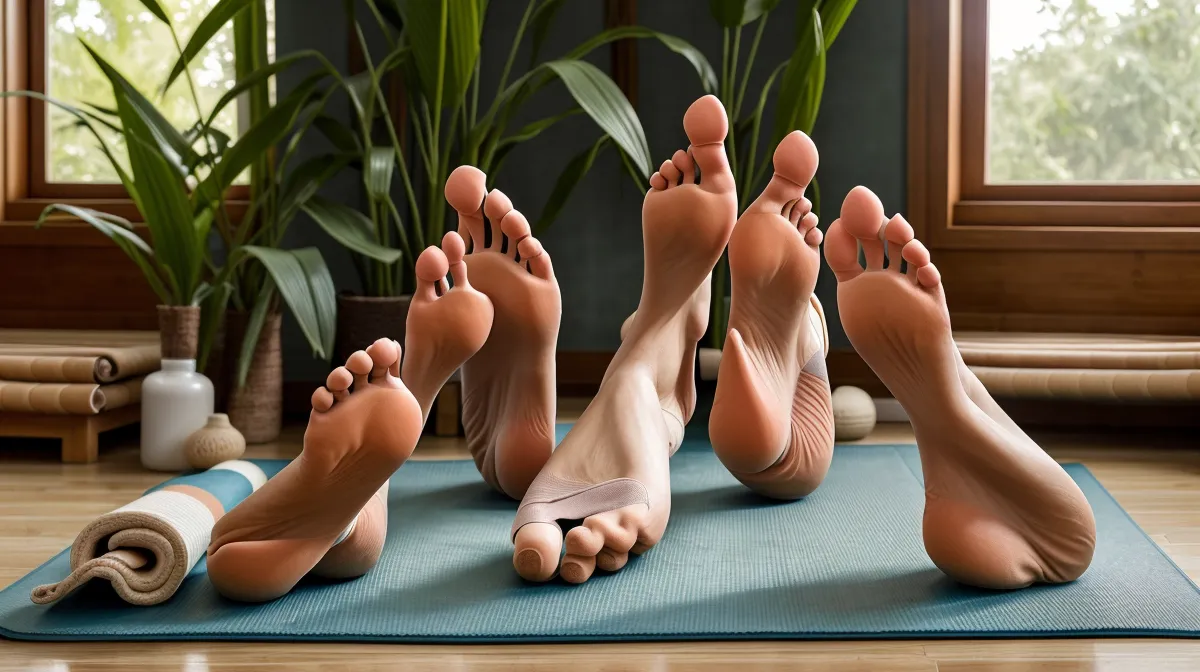
The bath mat in the bathroom of the Craftsman I rent in Sellwood has a faint gold ring worked into it, left over from months of turmeric soaks that never fully rinsed out. I teach yoga barefoot six days a week, so my feet are on display for a full room every class, and at some point my big toenail turned a color that had nothing to do with turmeric. Students bring it up more than you'd think: not just the nail itself, but foot care, nail health, and what a genuinely holistic approach to either one looks like once the yoga-lifestyle version on social media wears off.
Foot Care Questions I Get After Class
Most of the questions land in the same few minutes, right after class, while everyone's still barefoot and rolling up their mats. So here are the ones I actually get, answered straight through, instead of one long backstory attached to each.
Is This Really a Fungus, or Something Else?
The first question is whether a yellow patch automatically means fungus, and it doesn't — a nail can discolor from a stubbed toe or months of pressure in tight shoes just as easily as from anything fungal, and the two don't behave the same way over time. What I actually check is simple: is the discoloration sitting in one fixed spot that hasn't shifted in months, or is it traveling outward as the nail grows. A spot that stays put is more likely old trauma. If new nail keeps coming in the same off color, that's the pattern worth paying attention to, not a scuff you wait out.
Topical Fixes and Internal Support Aren't Interchangeable
A lot of people assume rubbing something onto the nail and supporting it from the inside are the same move, just different delivery methods, and they're not — they're two different levers entirely. These days I think less about what to paint on and more about what my body is actually building new nail out of, meaning keratin, from the inside, alongside anything topical. Neither one replaces the other, and leaning on just one is probably why the early attempts went nowhere.
Why the Vinegar Soaks Didn't Work for Me
For a stretch I did apple cider vinegar soaks every morning, twenty minutes with my foot propped on the tub edge before I'd even gotten dressed. I remember standing in the vinegar aisle at the Alberta Street Co-op buying another bottle, already half doubting it would do anything different this time. It didn't, really — a soak only ever works on what's actually sitting in the water with it, and the environment around the nail the rest of the day matters just as much as those twenty minutes did. What seemed to change things wasn't the soak at all, it was cutting down how long my feet stayed damp afterward, since pulling socks on too soon undid whatever those twenty minutes were supposed to accomplish. I've written separately about the tea tree oil phase that came before this one — The Barefoot Yoga Teacher's Guide to Stubborn Toenail Transitions: Why Tea Tree Oil Wasn't Enough — so I won't repeat that whole saga here, but the short version is oils alone didn't get me anywhere either, mostly because anything applied on top of the nail has a hard time actually getting through to where it would need to work.
Does Mat Hygiene Actually Matter?
It matters more than people expect. Reinfection often isn't about anything happening inside the nail at all, it's about what keeps touching your feet again and again — a mat that doesn't get properly dried can just keep reintroducing the same problem class after class. The rule that actually stuck for me is drying the mat fully between uses, not just wiping it down, because a mat that's still damp when you roll it up is undoing whatever a topical treatment is trying to do.
What a Thicker Nail Is Actually Telling You
Thickening and discoloration aren't the same signal, even though people lump them together. A nail can get denser or more ridged on its own, which says something about how the nail plate itself is growing, not just about surface staining. Honestly, most people only look at color and miss the texture change completely. Run a thumb across the nail every so often and pay attention to ridges or a change in give, not just whether it still looks yellow.
Shoes, Sweat, and the Environment Question
What's happening inside a shoe matters almost as much as anything touching the nail directly — heat, moisture, how long a foot stays damp after a workout or a rainy commute. In Portland that's most of the year. I started rotating pairs so nothing stayed damp two days running, and letting shoes actually dry out fully between wears instead of grabbing whatever was closest to the door.
Are My Pedicure Tools Reinfecting Me?
Honestly, most people don't think about their tools at all until something like this happens. Shared tools, or even your own tools reused without cleaning between sessions, can just keep re-seeding the same issue — it isn't always about your feet doing something wrong, sometimes it's about what keeps touching them. These days I keep the clippers I use on that one nail separate from the rest of my kit, and at a pedicure appointment I'll actually ask what gets done to clean tools between clients instead of assuming.
Sticking With a Routine Long Enough to See Anything
People start strong and taper off long before anything has had time to show, and that drop-off is usually the real reason a routine "doesn't work" — not the routine itself. How well blood is actually moving through your feet plays into this too, especially if you're on them all day teaching or training, since that affects how fast any of this can show up at all. What helped me stick with it was attaching the habit to something already automatic, brushing my teeth, locking the studio door, rather than relying on remembering. It's consistency the way a daily practice is consistency — nothing dramatic happens most days, you just don't quit before it evens out.
How Do You Know It's Actually Working?
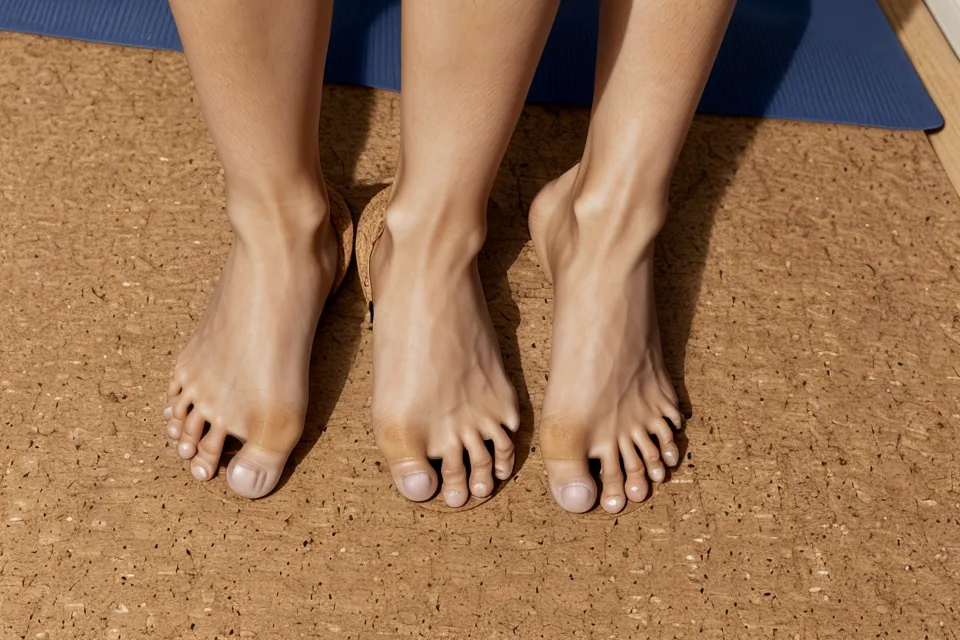
Growth is slow and uneven, and it only really shows up if you're comparing against something consistent instead of checking every single day and getting discouraged. The one photo that actually convinced me anything had shifted wasn't even one I was staring at on purpose — it was one my longtime trail-running partner Beckett pointed out mid-stretch after a run, tapping the screen and saying the base looked lighter than the last one he remembered. If you want the longer version of what that kind of tracking actually looked like, it's laid out in The Barefoot Instructor's Reality Check: My Personal Log for Restoring Nail Health — here, the short version is enough: watch for the discolored part shrinking back toward the tip as clean nail grows in underneath, not the whole nail flipping color at once.
None of this is dramatic once you're actually doing it. Most days it's just remembering to dry my feet properly and not skip the boring parts, not some big turning point. But these are the questions people actually ask me, barefoot, right after class, and they deserve straighter answers than a tidy before-and-after story.