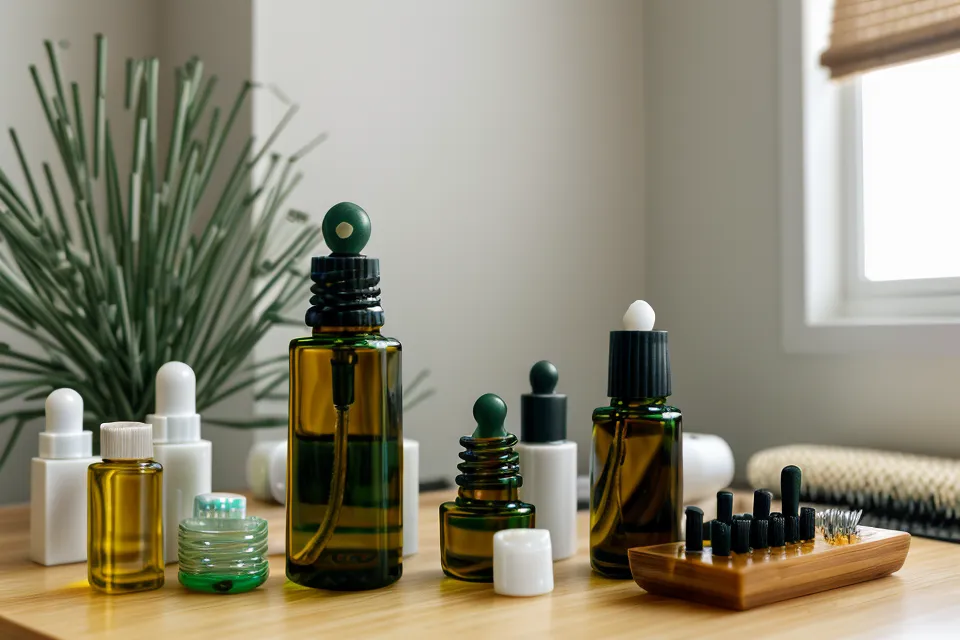
Tea tree oil smells like discipline, not like a cure. That gap between the ritual and the actual result is where most people chasing natural remedies for a stubborn, yellowing toenail get stuck — it's where I got stuck too, back before I understood what foot care and nail health actually take, on top of everything else that comes with a barefoot yoga lifestyle.
Here's the myth I hear on a loop: rub something natural on the spot long enough and it disappears, like a stain lifting out of fabric. It's a tidy idea. It's also wrong, or at least incomplete enough to waste a lot of time and a lot of oil.
Natural Remedies Aren't the Whole Story
Rubbing oil onto the surface of a toenail treats the outside of a structure that's largely sealed against anything getting in from outside — that's its own topic, and I'll leave the full mechanics of it to people who've mapped out exactly how far a topical treatment can reach. What I can tell you is that whatever you put on top has to work alongside whatever your body is already doing underneath, not instead of it.
There's a reason patience matters here more than loyalty to any one bottle: a nail grows from a hidden root, not from the visible plate you're staring at during Tree Pose, and the average monthly toenail growth rate is slower than most people assume. Slow enough that judging a routine by how it looks after a week or two is basically judging a marathon at the first mile marker.
Two Bare Months, Zero Polish, One Lesson
So I tried something almost embarrassingly simple: two full months of nothing on that nail at all. No tea tree oil, no clear coat, no polish of any kind — just bare keratin exposed to air on the theory that whatever was going on needed room to breathe. It didn't work. The color didn't shift, the texture didn't change, and by the end of it I'd mostly just gotten used to catching people's eyes drop to my foot mid-conversation.
What actually breaks most people's foot care routines isn't picking the wrong oil or wearing polish when they shouldn't. It's abandoning the whole thing before anything visible happens, which is its own kind of quitting a pose right before the shake finally settles. I wrote a longer personal log for restoring nail health around that same stretch, if you want the unfiltered, day-by-day version of how unglamorous consistency actually looks.
The Question Ogechi Keeps Texting Me About
One of my Thursday regulars, Ogechi Malone, is a big part of why this piece exists. She texts me a follow-up question after almost every class, and for a while it was some version of the same thing: why isn't the natural stuff working faster? That question assumes every yellow or thickened nail is doing the same thing underneath, and it isn't — a stain from constantly jamming your toes into tight-fitting shoes reads differently than something with a fungal cause, even though from across a room they can look identical. I'm not in a position to tell anyone which one they're looking at, but ruling out the difference matters more than blaming your oil.
My friend Marisol Theis, who co-organizes retreats with me and never shows up to one of our workshops without homemade snacks for everyone, was the one who pointed out that most of the questions we get about feet aren't really about feet. They're about wanting a shortcut. She wasn't wrong. Everyone wants the version where you find the one right bottle and the problem resolves itself, and I get the appeal, because I wanted that too.
Is Your Nail Healing, or Just Waiting Its Turn?
Pulling grip socks on after a shower, I still run my thumb over the edge of that nail without thinking, checking for the same thing every time: no ridge to catch on, just a smooth cuticle line and an ordinary, unremarkable pink underneath. That's the actual marker worth tracking, not how the surface looks under studio lighting. Color is the last thing to change. Texture is usually the first.
Mat hygiene gets blamed for a lot in this conversation, and while a damp mat sitting balled up in a bag for a few days isn't doing anyone favors, wiping it down won't undo whatever's happening at the nail bed on its own. It's maintenance, not treatment. I buy the wipes I actually trust at New Seasons Market on Division, mostly because the label doesn't promise anything it can't back up — which by this point is probably the single quality I look for in anything foot-related.
Foot Care Is an Environment, Not a Product
What actually shapes how this turns out is the environment your feet live in for the other twenty-three hours of the day you're not on a mat — how much time your toes spend crammed together in something damp, whether shoes get any real chance to dry out between wears, that kind of unglamorous logistics. That's a bigger lever than most people give it credit for, and it's a big part of why I ended up looking at how internal supplements like Keravita Pro support barefoot foot care from a different angle than the topical stuff I'd already tried.
None of this required some elaborate protocol. It required treating my feet as part of a bigger system instead of a single spot to dab oil on, which is a shift in thinking more than a shift in product.
Stop Chasing a Quick Fix
If you're standing in an aisle trying to decide between three bottles of something "natural," here's the actual rule: judge a routine by texture and consistency over the full stretch it takes a nail to replace itself, not by color after a week, and don't drop something reasonable just because a different bottle promised faster. I laid out the fuller version of what that looks like day to day in my journey from toenail shame to a real foot care routine, for anyone who wants the specifics instead of the philosophy.
Tea tree oil was never the villain in this. It just isn't a system by itself, and expecting one ingredient to do a system's job is where most natural-remedy stories quietly fall apart — mine included, before I stopped asking a bottle to do the whole thing.