The Yoga Mat Hygiene Myth Everyone Believes
Twenty minutes. That's how long I leave my yoga mat sitting in a vinegar bath every week now. For months, that sounded excessive to me for something I could just wipe down after class. A damp paper towel and a spritz of something lavender-scented felt like plenty of yoga mat hygiene. It wasn't, and I found that out standing in a lunge with a student's gaze locked on my bare foot instead of the pose.
That gaze was aimed at a mark on my big toenail I'd been trying to pretend wasn't there. As a barefoot yoga teacher, my feet are basically on display six days a week, so foot health isn't some optional side project for me. It's part of the job. I assumed a natural nail care routine and a reasonably clean mat meant I had nothing to worry about. Turns out those two things aren't the same conversation at all, and mixing them up is the actual myth worth correcting here.
Your Mat Holds Onto More Than Sweat
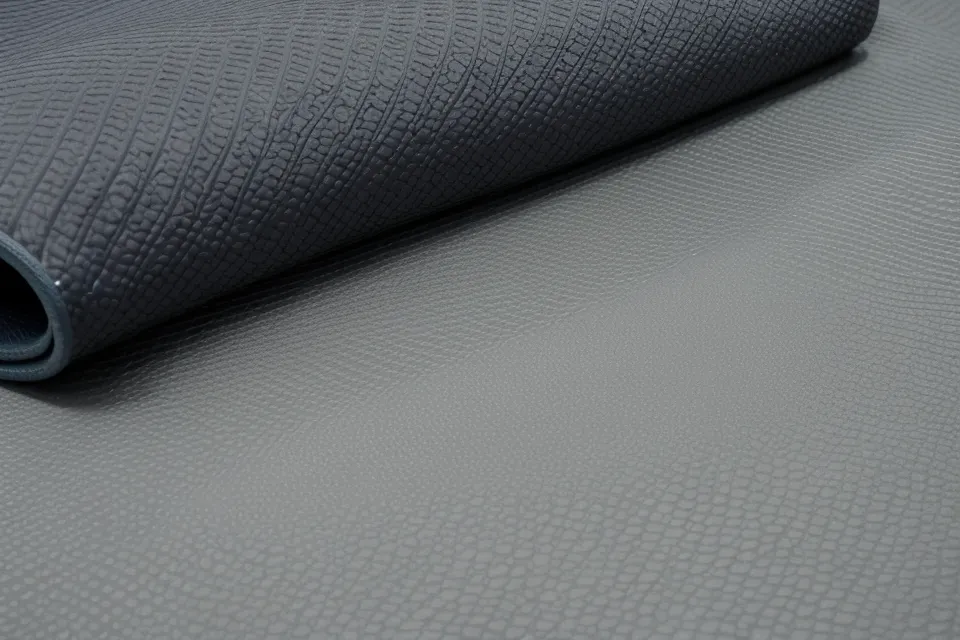
Open-cell yoga mats are designed to be porous, which is exactly what gives you that grippy feel during a sweaty flow class. That same porousness makes the mat hold onto everything your skin leaves behind, including the microscopic fungi that cause athlete's foot and nail trouble. Sweat isn't just water leaving your body. It's salt, oil, and a food source for whatever's already living on the surface.
Not every mark on a nail is fungal, for what it's worth. Sometimes it's old trauma from a stubbed toe or a dropped weight, which is a completely different question from what's happening with your mat. Worth figuring out before you blame your yoga practice for anything.
Here's what nobody tells you about a damp mat left rolled up in a bag: fungal spores that land on it can survive there for a long stretch. If you're only wiping the surface, you're not removing them. You're redistributing them with a fresh coat of whatever spray you just used. Over time that builds into what's called a biofilm, a stubborn combined layer of bacteria and fungi bonded to the surface that a basic wipe can't touch. Your shoes hold onto moisture in a similar way, though that's really its own conversation separate from anything happening on a mat.
This is the part I didn't want to accept: I could soak my feet, dry them carefully, do everything right for my toenail, and then step right back onto the same contaminated surface the next morning. A clean pair of feet on a dirty mat is a losing equation, no matter how good your natural nail care habits are otherwise. Mat hygiene isn't a side note to foot health. It's half the equation, maybe more, if you're barefoot as often as I am.
Can You Ever Clean Too Much?
There's a flip side to this myth, and it caught me off guard: you actually can clean too much. When I first found that mark on my nail, I reached for the strongest thing I could find. My trail-running buddy Beckett Yun, who genuinely believes any injury bounces back within a week no matter what it is, told me to just soak the whole foot in diluted bleach and call it handled. So I did, twice a week for about a month. It did nothing useful at all. If anything, my skin came out drier and angrier than before I started.
Skin has its own microbiome, a balance of ordinary bacteria that generally works in your favor. Mats and shoes build up something similar over time. Blast that balance away with harsh chemicals and you don't get a clean slate. You get an empty one, and the toughest, most resistant organisms are usually the first to move back in without any competition. Correcting for a fungus problem by nuking everything in sight just clears space for whatever's most stubborn to take over.
The Reset Protocol That Actually Works
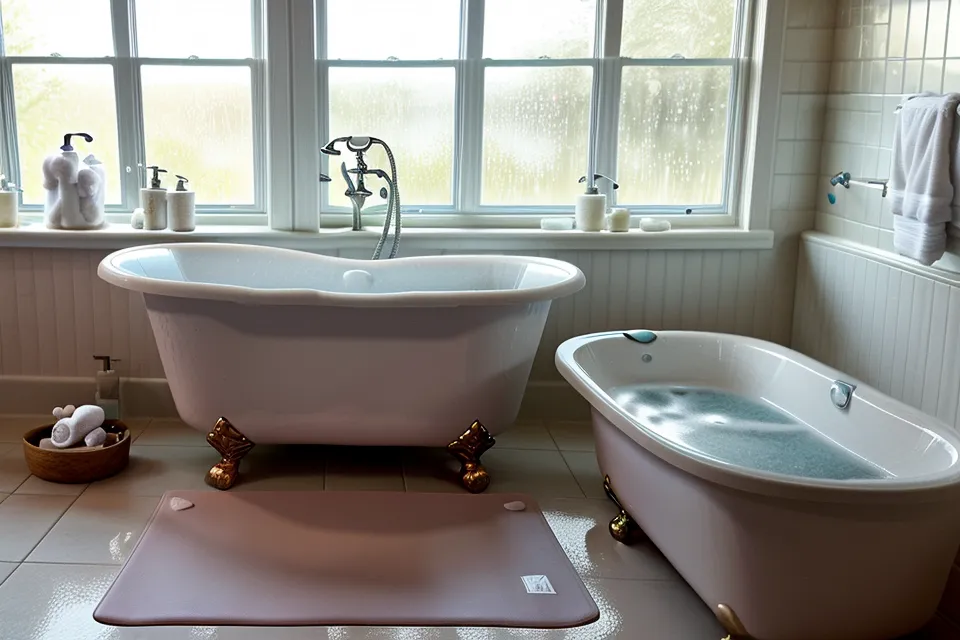
Once I stopped trying to sterilize everything, I settled into an actual weekly reset instead of a daily half-measure. I fill the tub with lukewarm water and about two cups of white distilled vinegar. The plain jug from New Seasons Market on Division Street works fine, nothing fancy needed. I let the mat sit there for that twenty-minute stretch I mentioned earlier. Vinegar is a mild antifungal without wiping out everything living on the mat's surface, and twenty minutes seems to be the sweet spot. Longer than that and you risk breaking down the rubber. If your own nails need attention while the mat soaks, a step by step apple cider vinegar foot soak is a reasonable way to use that same window of time.
After the soak, I rinse the mat under a steady, warm shower to flush out the vinegar and whatever loosened up. No boiling water needed, just consistent pressure. Drying matters just as much as the soak itself, since fungi favor dark, damp corners over sunlight or moving air. Portland sun is unreliable enough that I mostly rely on a small UV-C lamp in a dedicated drying spot instead of waiting around for a clear afternoon.
For a final layer, I use a very light mist of diluted essential oil on the mat itself, mostly thyme and oregano, though I don't count on that step to do the heavy lifting. Oils sitting on a surface don't always penetrate the way you'd hope, which is worth remembering before you build a whole routine around a bottle of something fragrant. Clippers and pumice stones deserve the same attention as the mat, honestly. A clean mat won't help much if your tools are carrying the exact thing you're trying to get rid of. Learning how to sanitize your yoga pedicure tools properly closed that gap for me.
Tracking Progress Without Obsessing Over It
I still glance at that nail more than I probably need to, though how quickly a nail actually grows out and replaces itself is a whole separate topic worth its own deep dive. A nail can also thicken for reasons that have nothing to do with infection at all, which is easy to forget when you're staring at your own foot looking for answers. Neither of those things is really about your mat, but both are worth knowing before you assume the worst.
The change, when it finally showed up, wasn't dramatic. Pulling on a pair of grip socks after a shower one morning, I noticed the cuticle looked smooth and ordinary, just regular pink, nothing I felt the need to examine twice. It's a small, unglamorous kind of relief, the kind you almost miss because there's no dramatic moment attached to it. Just a quiet realization that you'd stopped checking as often.
Whether you address something like that from the outside in, with soaks and mists, or from the inside out, is its own decision entirely, not one I'll pretend to have fully sorted out. I looked hard at both angles for my own nail. The longer version lives in my three month ProNail Complex review, if you want to see how that fit into a teaching schedule this busy.
Respect the Mat, Not Just the Nail
So here's the corrected version of the myth: a mat that looks clean and smells fine isn't automatically safe, and scrubbing it into oblivion isn't automatically safer either. The real habit worth building is a weekly reset—soak, rinse, dry with real airflow or UV, light oil mist if you want it—treated as non-negotiable, not as something you get to when you remember. Skip that, and you're just handing your feet back to whatever's already living on the surface, no matter how good your other habits are.
If you're a fellow barefoot teacher or student feeling that same flash of embarrassment I felt in that lunge, you're not alone in it. Most of us are just catching up to something our mats have been trying to tell us for years. Give the mat the same attention you give your own natural nail care routine, and treat foot health as something that starts on the floor, not just at the nail.